NLP Powered Conversational Routing System
Senior Experience Designer
Designed Erica’s “Contact Us” experience, a scalable conversational routing system enabling users to describe their needs naturally and be directed to the right support channel across 50+ call types.
Powered routing for nearly half of all mobile support calls at Bank of America.
48%
of all mobile calls routed through Erica
1.4M+
call deflections annually
20%
reduction in mobile calls since launch
Maintained client satisfaction with no negative impact
to SAT scores
The Problem
The original experience relied on predefined options or agent-assisted routing, often requiring users to be transferred multiple times before reaching the right support channel.
This created friction, increased handling time, and made it difficult for users to quickly resolve their issues.
My Role
Led design of the conversational routing experience, partnering with product and content teams to define how user intent is captured, interpreted, and mapped to support outcomes.
Defined interaction patterns for conversational input and clarification
Designed scalable structures for routing across multiple support scenarios
Iterated on the experience through testing and continuous refinement
The Shift
We moved from a menu-driven support experience to a conversational routing model, where users could describe their needs naturally and be guided to the appropriate solution.
Designing the System
We moved from a menu-driven support experience to a conversational routing model, where users could describe their needs naturally and be guided to the appropriate solution.
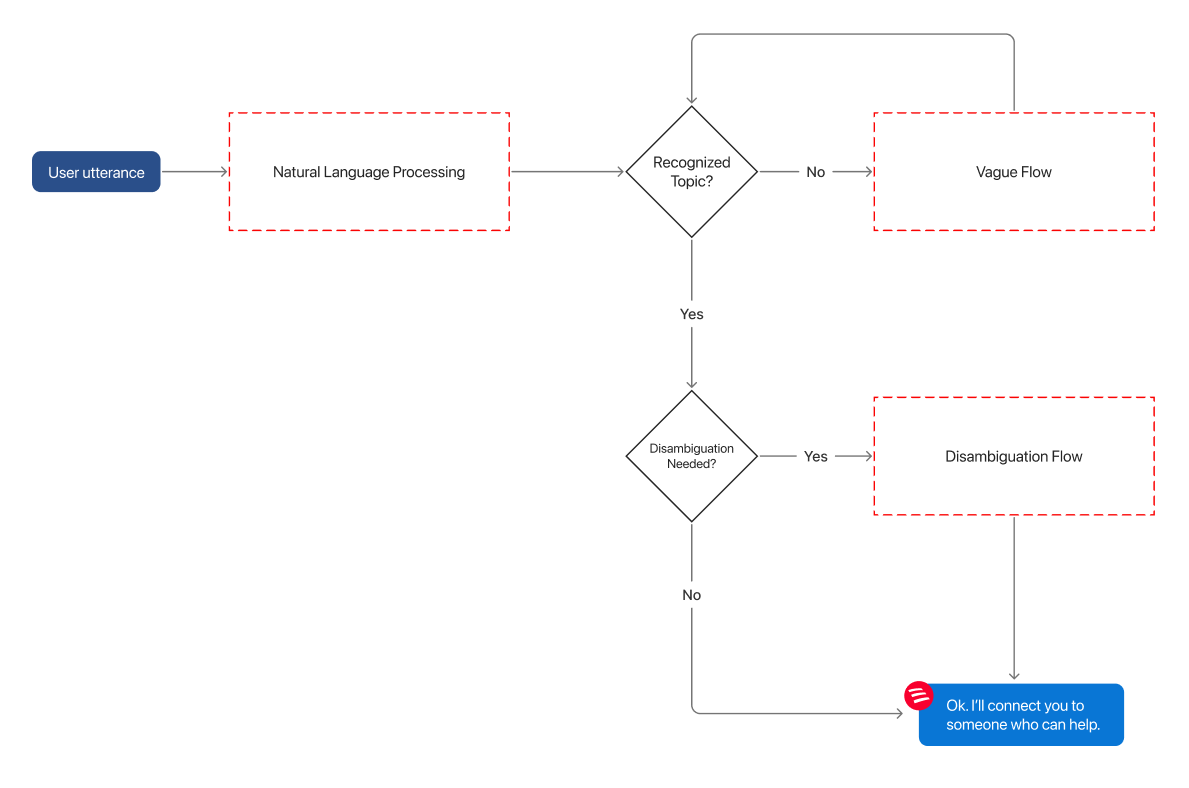
Rather than designing a single flow, we created a system that translates user input into structured routing logic.
Conversational routing framework
User utterances are interpreted using NLP
Inputs are mapped to structured “Call Topics”
Each topic routes to a specific support path or agent
Modular topic system
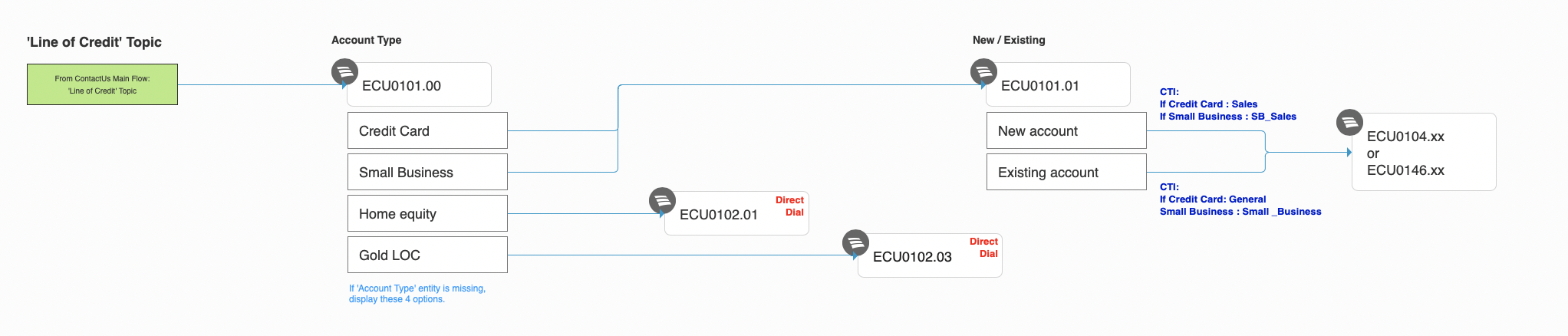
Each call topic required different inputs and follow-up questions. We designed a modular system where:
Each topic has its own logic and requirements
Flows can evolve independently
New topics can be added without redesigning the core system

Key Design Considerations
Designing for ambiguity
Users rarely describe their issue clearly on the first attempt.
We introduced clarification patterns and follow-up questions to progressively refine intent.
Balancing speed and accuracy
Routing too quickly risks incorrect outcomes, while too many questions create friction.
We designed interaction patterns that balance efficiency with confidence in routing decisions.
Designing for scale
The system needed to support a growing number of call topics.
We focused on creating reusable structures that could scale without increasing complexity.