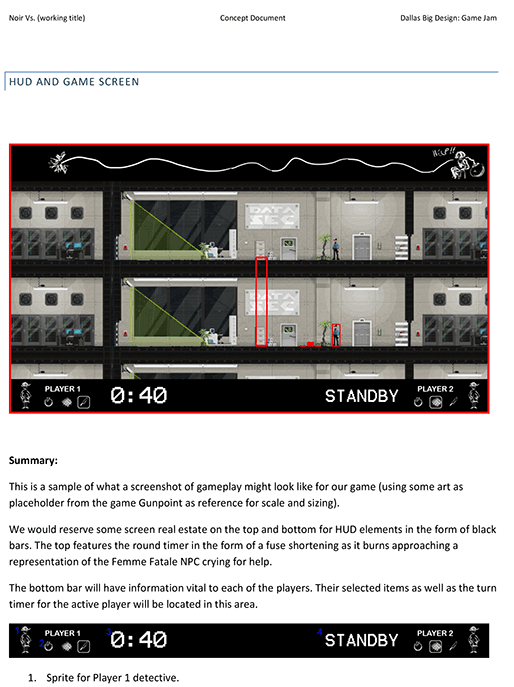
Interface
Define the shared game screen
HUD placement, player states, selected items, and the two timing systems.
Dallas Big Design · Game Jam
I led the design of Noir VS, a two-player game created in seven days by a newly assembled team.
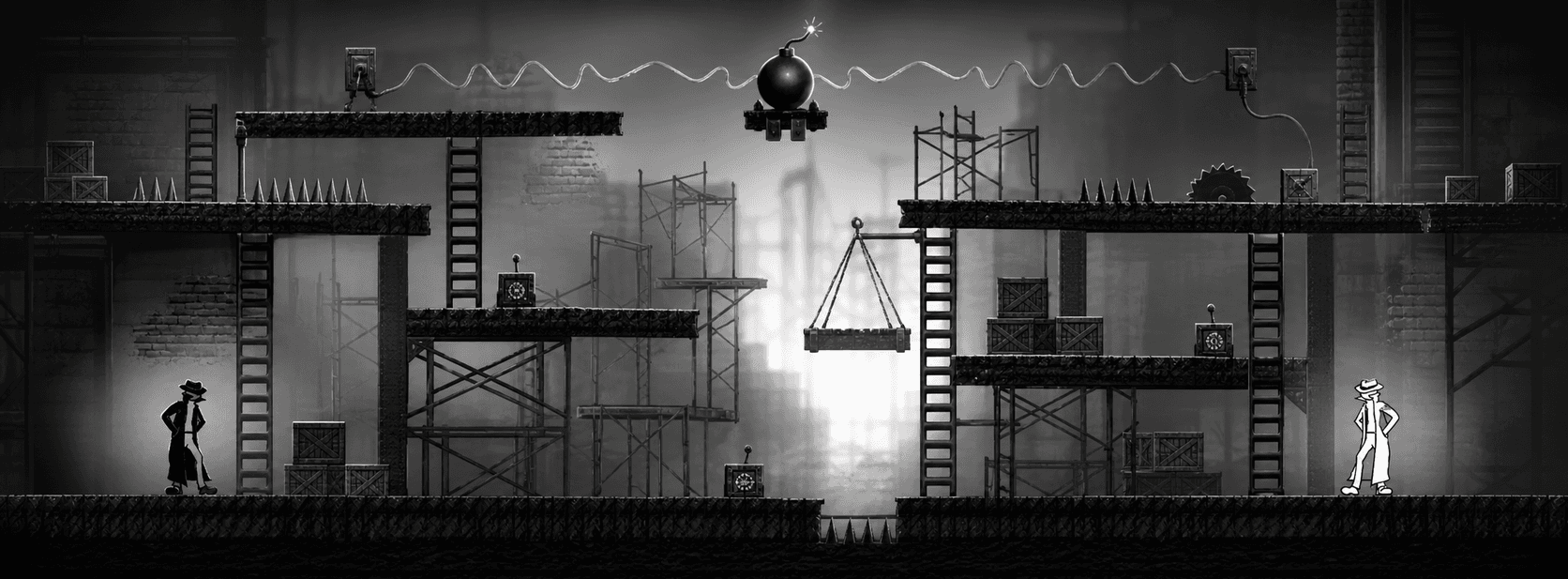
I led the design of Noir VS, a two-player game created in seven days by a newly assembled team.
Competition result
Top 3
finalist
Dallas Big Design Game Jam
Recognized for the competition's most innovative concept and greatest future potential.
The challenge
Our team met for the first time at the Dallas Big Design Conference Game Jam. We were given three themes—multiplayer, competition, and cooperation—and one week to design and build a game around them.
The immediate challenge was finding a concept that used all three themes in a meaningful way. It also needed to be understandable, technically feasible, and focused enough for an unfamiliar team to complete within the deadline.
After exploring ideas together, we chose a direction that turned the tension between competition and cooperation into the central mechanic.
The game jam prompt
Assigned themes
The resulting tension
Players need each other to advance, but only one can win.
If competition prevents progress, the shared timer expires and both players lose.
The core idea
Noir VS was designed exclusively for two players. Each controlled a private investigator racing to rescue the same character before time expired.
Players alternated control of the same progressing level. During a turn, they could advance toward the goal, clear obstacles for both players, or place new traps for their opponent. If neither player reached the destination before the shared timer expired, both lost.
That created the central dilemma: each player wanted to win individually, but neither could succeed if their rivalry prevented the level from moving forward.
The core gameplay loop
Takes a turn
Player 1
Inherits everything the other player changed.
One persistent level
Every action remains for the next turn
Takes a turn
Player 2
Inherits everything the other player changed.
Turn ends · control switches · loop repeats
One persistent timer
05:00
Reach the goal before time expires—or both players lose.
Making it buildable
As lead designer, I documented the complete gameplay loop, turn structure, timing rules, controls, traps, items, collisions, interface, and level behavior.
I used diagrams and placeholder artwork to communicate scale and mechanics before final assets were available. This allowed development to begin while the visual team continued producing original artwork.
I also managed the feature and asset list, distributed work according to priority, and continually adjusted scope around what the team could realistically complete within the remaining time.
From concept to specification
Interface
HUD placement, player states, selected items, and the two timing systems.
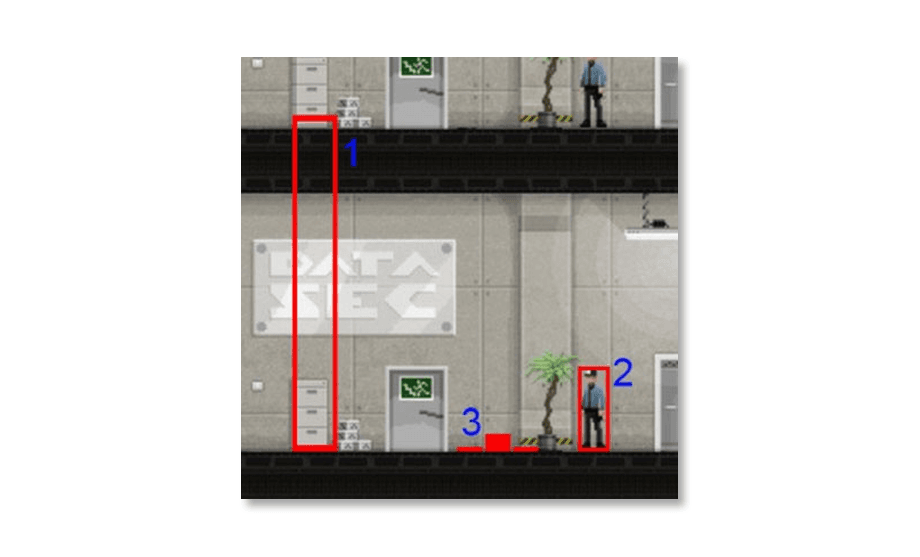
Mechanics
Collision areas established where players could climb, move, and disarm traps.
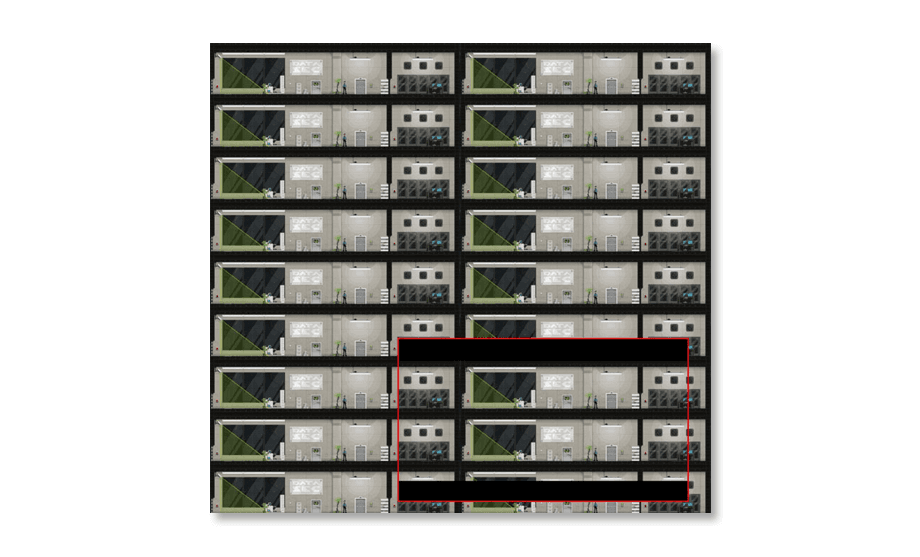
Environment
The level map showed the visible play area within a larger scrolling environment.
These shared references allowed programming and art to move forward in parallel while the gameplay system continued to evolve.
Designing the interaction
The experience needed to feel fast while still giving players enough information to make strategic decisions.
A shared round timer created urgency, while increasingly short turns accelerated the pace as the round progressed. A rock-paper-scissors relationship between traps and items made players decide what to carry, what to disarm, and when to obstruct the other player.
The interface separated information for the active and waiting players, including turn status, selected items, and remaining time. Movement, collision areas, and trap interactions were documented carefully so the prototype could remain responsive and understandable.
Making the rules readable
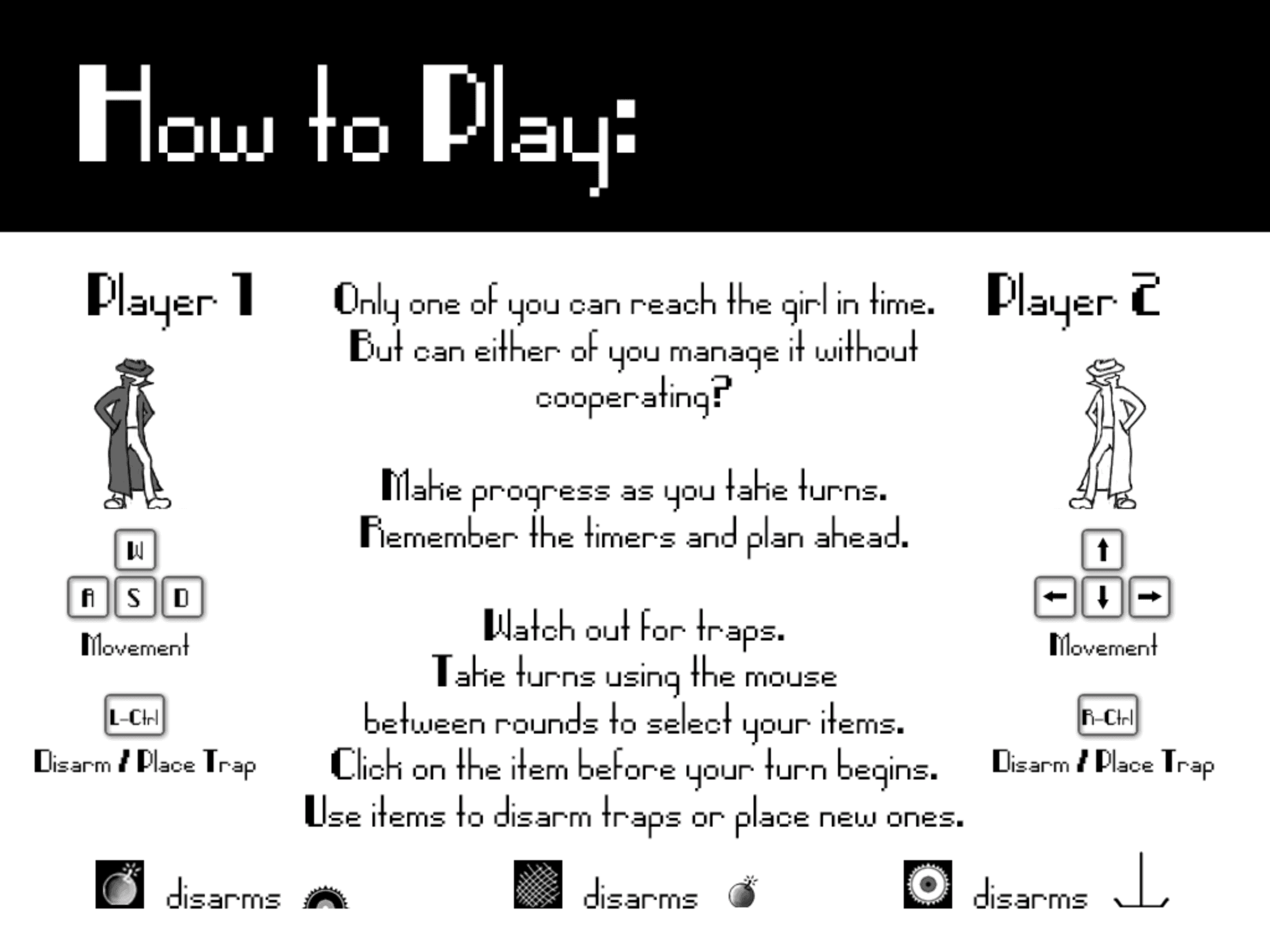
Before play
The tutorial introduced separate controls, alternating turns, traps, items, and the risk that both players could lose.
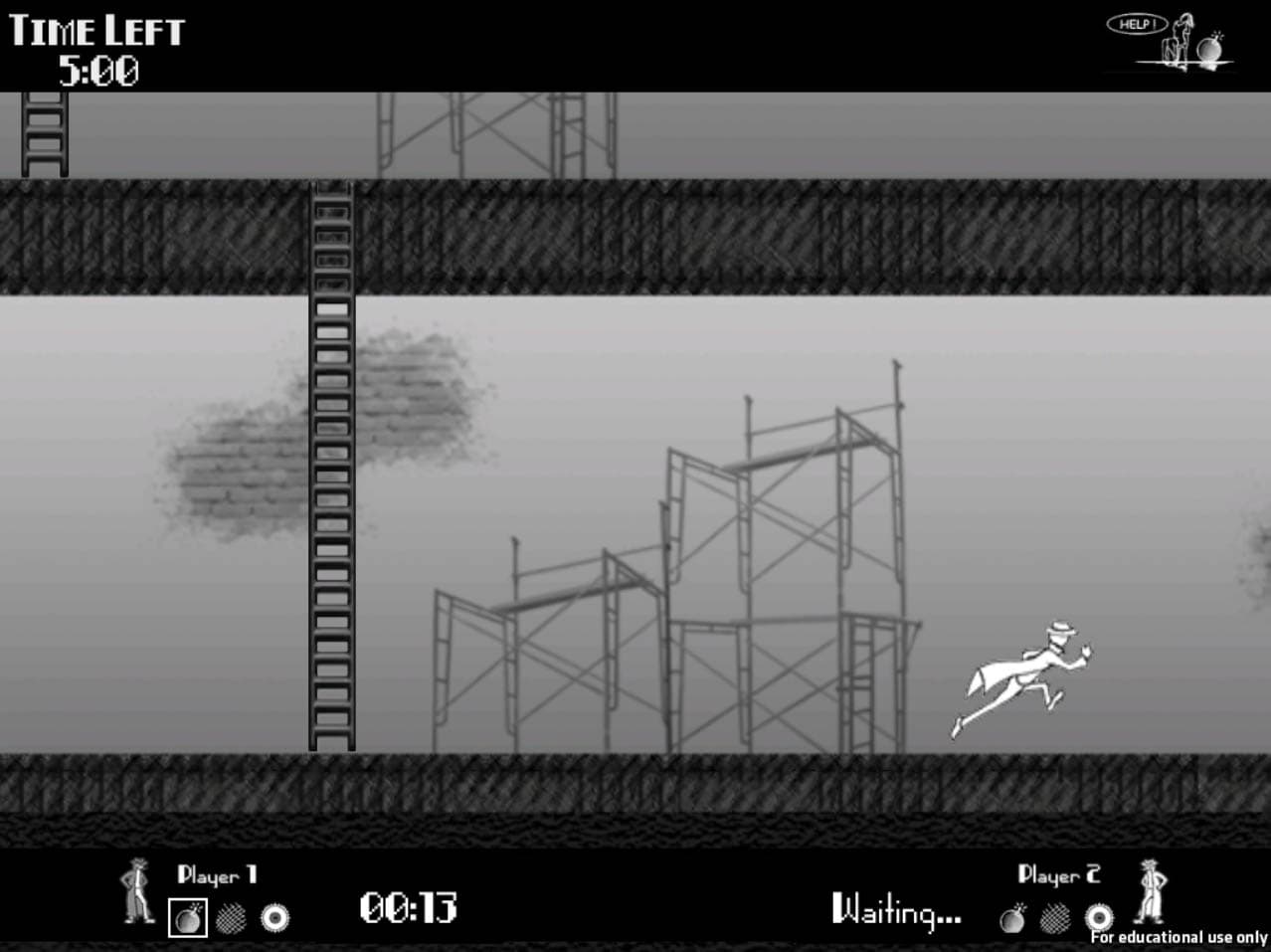
During play
The HUD surfaced the shared countdown, active turn, waiting player, and each player’s selected item.
Outcome
The team completed a working build with the core gameplay loop and original visual assets in place. Although the full planned scope could not be implemented within seven days, the central tension between cooperation and competition remained intact.
Noir VS finished as a top-three finalist. Judges highlighted it as the competition's most innovative concept and the entry with the greatest future potential.
The project taught me how important clear documentation and active communication become when several disciplines must work in parallel. It also reinforced an approach that would remain valuable throughout my career: define the underlying system clearly, protect the central idea, and make scope decisions around what the experience truly needs.
The seven-day result
Playable build
The central competitive-cooperative loop remained intact.
Original production
The prototype shipped with artwork created by the team.
Competition result
Top-three finalist, recognized for innovation and potential.