Gunnar Games · Small Town Terrors
Designing a mystery from story to gameplay.
As a junior game designer, I helped shape Galdor’s Bluff through narrative development, world-building, gameplay flow, scene design, and original puzzles.
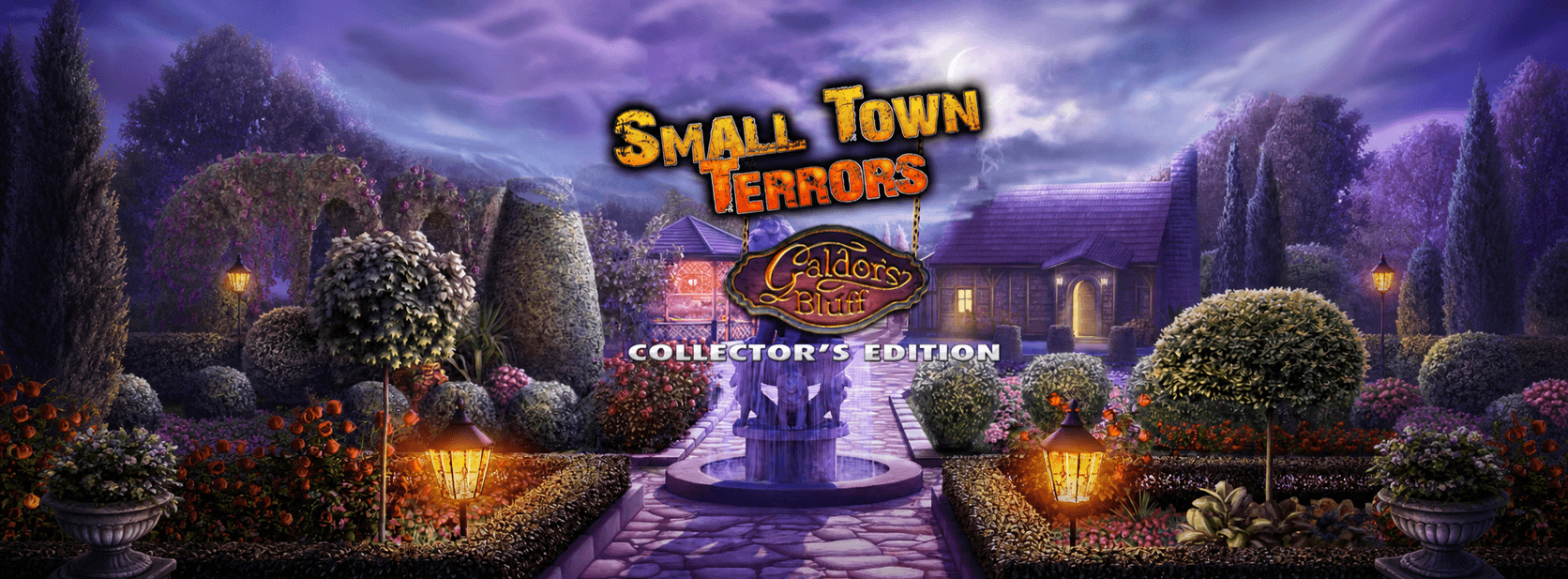
As a junior game designer, I helped shape Galdor’s Bluff through narrative development, world-building, gameplay flow, scene design, and original puzzles.
80%+
player approval
Big Fish Games platform
2015
commercial release
Published through Big Fish Games
2
released editions
Standard and Collector’s Edition
The opportunity
Turning an original mystery into an explorable world.
Gunnar Games was developing a new entry in the Small Town Terrors hidden object puzzle adventure series. The experience needed an original setting and mystery that could sustain a complete game while fitting the conventions and audience expectations of the genre.
As a junior game designer, I contributed across narrative and gameplay design. I developed the central mystery, established characters and locations, mapped the player's progression, documented interactive scenes, and designed original puzzles.
The challenge was making these elements work as one experience. Story revelations needed to motivate exploration, environments needed to support specific interactions, and puzzles needed to feel like believable parts of the world rather than disconnected obstacles.
Turning a mystery into a world players could investigate.
World
An isolated town shaped by rivalry, illusion, and hidden history.
Plot
A magician apparently dies during his greatest performance.
Player journey
Investigate locations, suspects, evidence, and relationships.
Gameplay
Turn discoveries into exploration, inventory actions, and puzzles.
Designing the game structure
Connecting story, spaces, and progression.
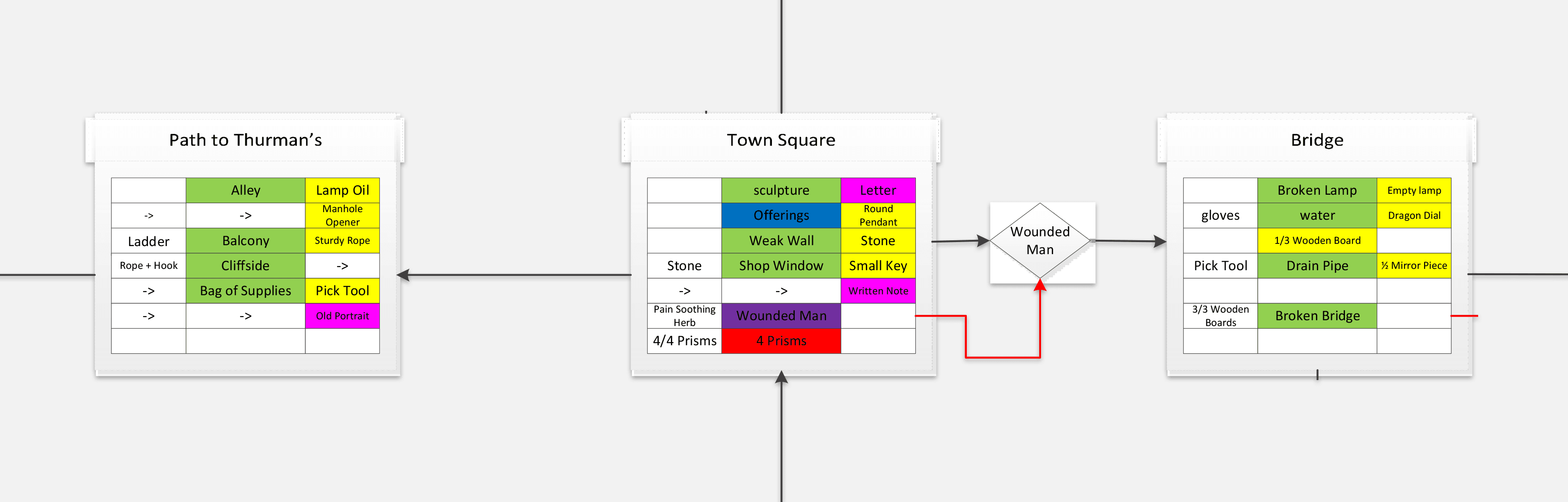
Once the central mystery was established, I mapped the game as a network of locations, narrative events, inventory items, hidden-object scenes, and puzzles.
The map helped the team understand how players would move through Galdor's Bluff and how progress in one location could unlock an interaction somewhere else. It also made dependencies visible early: where an item was discovered, where it would be used, which puzzle blocked the next area, and when important story information should be revealed.
This transformed the narrative from a linear outline into a playable structure the wider team could evaluate and build.
Mapping a playable world.
The production map connected each location with the story events, items, interactions, and puzzles required to move the investigation forward.
Map legend
Color identified the content and interaction types coordinated within each location.
Dialogue
Hidden-object scene
Puzzle
Story
Inventory item
Zoom
WOW moment
Designing playable scenes
Translating narrative intent into interaction requirements.
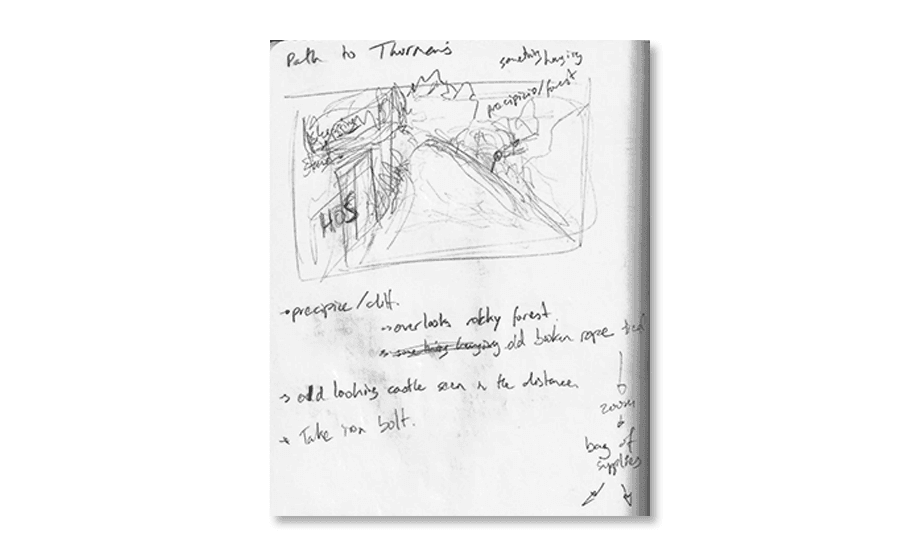
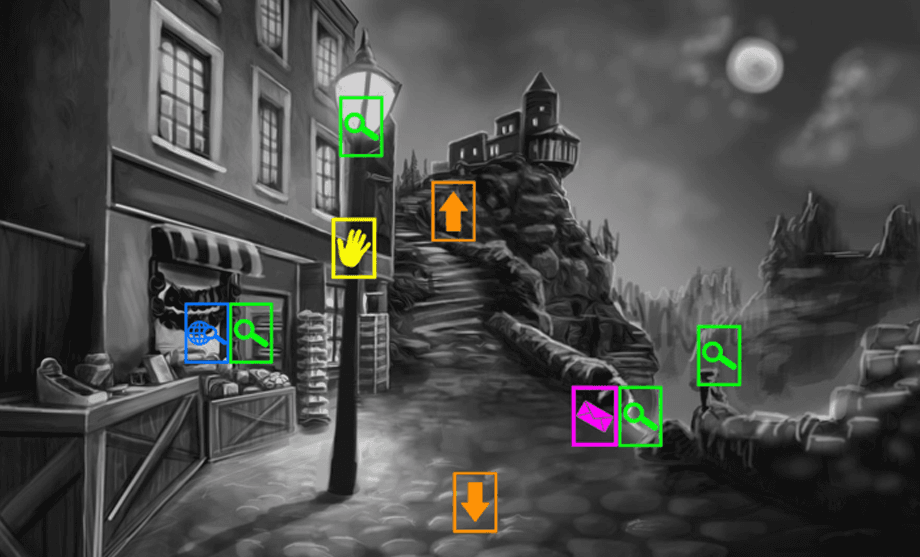
Each location began with its role in the story and the atmosphere it needed to create. From there, I sketched the composition, described important landmarks, and documented how players would interact with the environment.
Working with placeholder artwork, I identified navigation points, close-up views, inventory interactions, puzzle entrances, hidden-object scenes, and narrative items. These specifications gave the art and development teams a shared understanding of what every scene needed to support.
The process moved from a rough idea of the environment to a detailed interaction plan and, eventually, a fully realized scene inside the game.
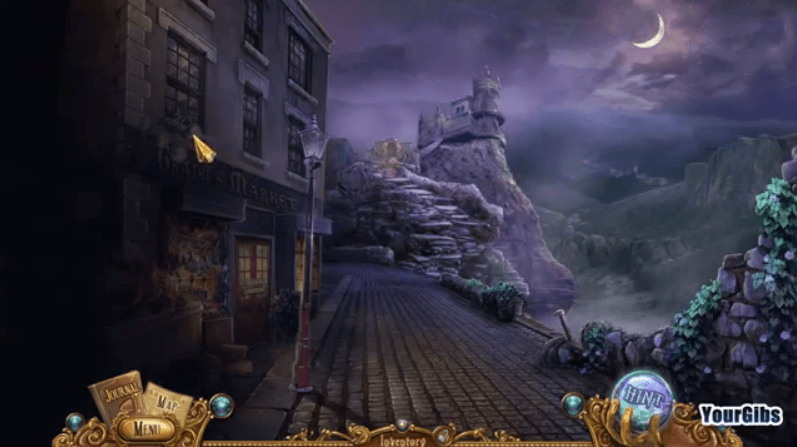
From narrative idea to playable environment.
The path to Thurman's mansion evolved from an early composition sketch into a detailed interaction plan that guided the final scene produced by the art and development teams.
Designing the puzzles
Making mechanics feel native to the world.
I also designed bespoke puzzles that combined clear objectives with the game's themes of magic, machinery, and illusion.
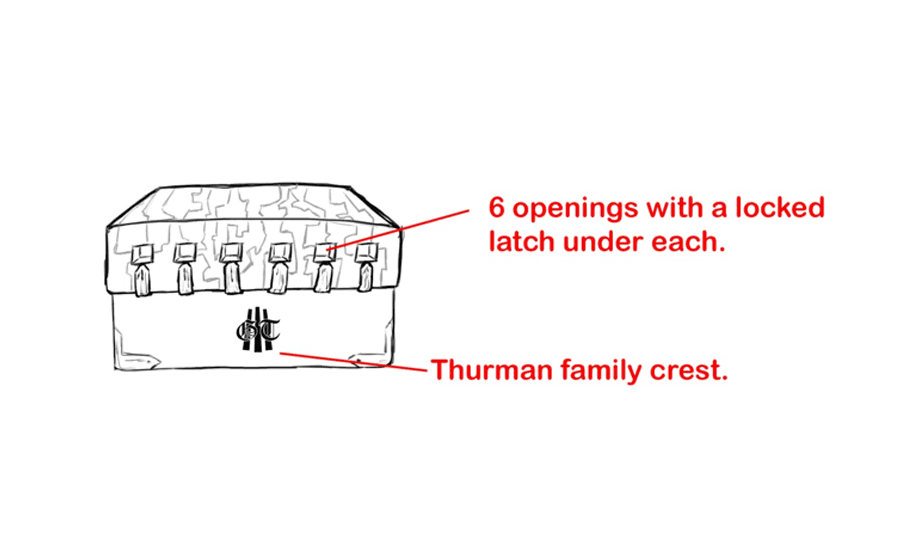
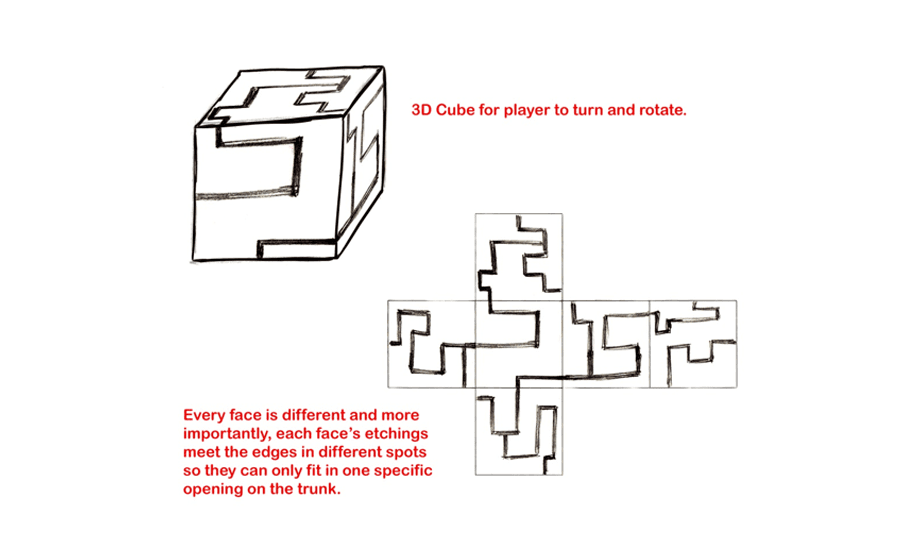
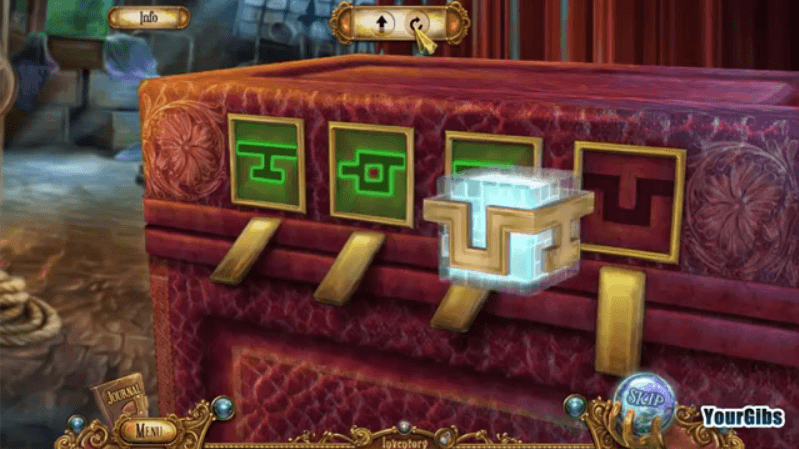
For each puzzle, I documented its purpose, rules, interaction model, feedback, failure conditions, and solution. One concept asked players to rotate a patterned cube and match each face to openings on an ornate trunk. Other designs involved mixing chemicals in the correct sequence, manipulating mechanical panels, tracing electrical circuits, and reproducing patterns of light.
The goal was to make every puzzle understandable on its own while ensuring it still felt connected to its location and the broader mystery.
Turning a mechanic into a playable puzzle.
Players rotated a patterned cube to find the face matching each opening, releasing the trunk's six latches one at a time.
Project outcome
From an early concept to a released game.
Small Town Terrors: Galdor's Bluff was released through Big Fish Games in 2015. The finished game retained the central mystery, world, characters, progression, and puzzle concepts developed during preproduction.
Following its release, the game received approval ratings above 80% from players on the Big Fish platform. Sales exceeded expectations, contributing to its release as a Collector's Edition.
For an early-career project, it gave me experience contributing to a complete commercial production. I learned that clear documentation was essential for carrying design intent across narrative, art, and development—especially when another discipline would ultimately turn an idea into the finished experience.
Defining the relationships between narrative, environments, inventory, progression, and interaction also introduced me to a more systems-oriented way of thinking—one that would later become central to how I approached product and experience design.
The released experience
Galdor's Bluff in motion.
The official trailer brings together the mystery, environments, characters, hidden-object scenes, and puzzles developed for the final game.